One in-house pipeline
Detection, tracking, rendering and encoding run in a single GPU pipeline. Output matches the source video's specification and keeps the audio track; 4K and HEVC sources are supported.
Zhengzhou ORedact Information Technology does one thing: privacy redaction for images and video, with an in-house pipeline and models, the Damaya web app, and an enterprise API available by invitation.
We do one thing: detect and mask faces, license plates and sensitive text in images and video. Damaya is the self-service web app for individuals and small teams; the ORedact API is for development teams integrating into their own systems.
Based in Zhengzhou, incorporated in September 2025 after the project started in July 2025. The pipeline, editor and detection models are built in-house; the models are trained continuously on our own footage and improved against real scenes.
The enterprise API is available by invitation: validate footage and workflow first, then agree on price, capacity and support. Dedicated capacity and on-premises deployment are assessed separately; there is no standard enterprise plan yet.
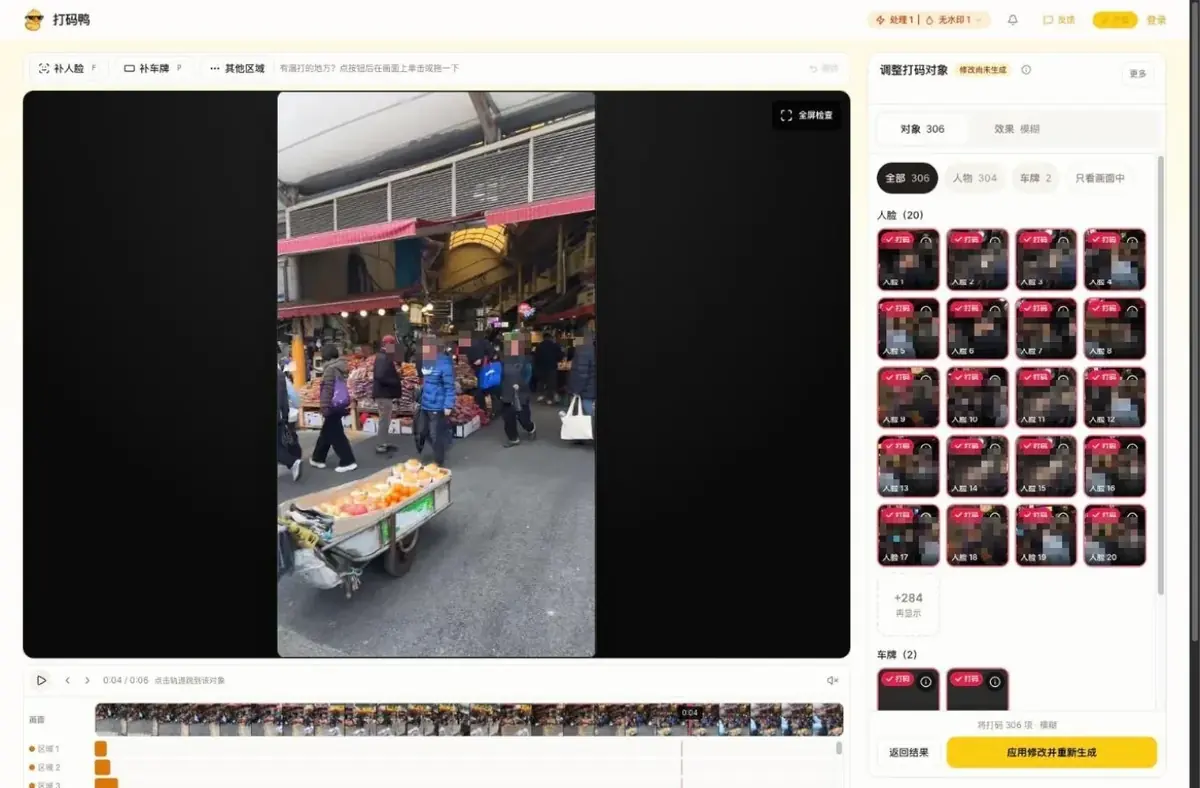
Redaction quality comes down to four things: detection rate, tracking stability, output quality and review effort. We focus on those four.
Detection, tracking, rendering and encoding run in a single GPU pipeline. Output matches the source video's specification and keeps the audio track; 4K and HEVC sources are supported.
The plate model is trained on dashcam footage we collect ourselves; the face model is iterated on crowds, profiles and small distant faces. Both switched to in-house versions in October 2026. Uploaded content is never used for training.
Multiple appearances of the same person in a video are grouped, so keeping someone visible takes one click. Detections can be reviewed frame by frame, and a re-render after adding regions needs no re-upload.
Every change is compared frame by frame on our own test sets, with misses, false positives and processing time recorded before it goes live.
July 2025
Project started: redaction backend and website development begins.
September 2025
Zhengzhou ORedact Information Technology Co., Ltd. incorporated.
October 2025
Video engine started: GPU pipeline, face and plate detection, tracking and rendering.
March 2026
Development of the Damaya web app begins.
April 2026
Damaya launches with paid watermark-free downloads.
October 2026
In-house plate and face models go live; processing history and re-editing; enterprise API pricing published.
These commitments are written into the privacy policy and terms of service.
Images, videos and results uploaded to Damaya are deleted automatically within 24 hours of completion; for API customers, retention and deletion are agreed in writing before access.
Uploaded content is used only to complete that request and is never used to train models.
Services run in mainland China, files are stored in Alibaba Cloud Object Storage, and all transfers use HTTPS.
The website and service hold ICP and public security filings; the privacy policy states what is collected, how long it is kept and users' rights.
Online redaction for individual creators and small teams: upload an image or video, detect faces, plates and sensitive text, review and export.
damaya.cnFor development teams integrating redaction into their systems. Currently by invitation: validate footage first, then fix scope, volume and pricing.
API pricing and how to applyAPI access, volume partnerships and deployment requests: email us.
Monday to Friday
9:00 - 18:00